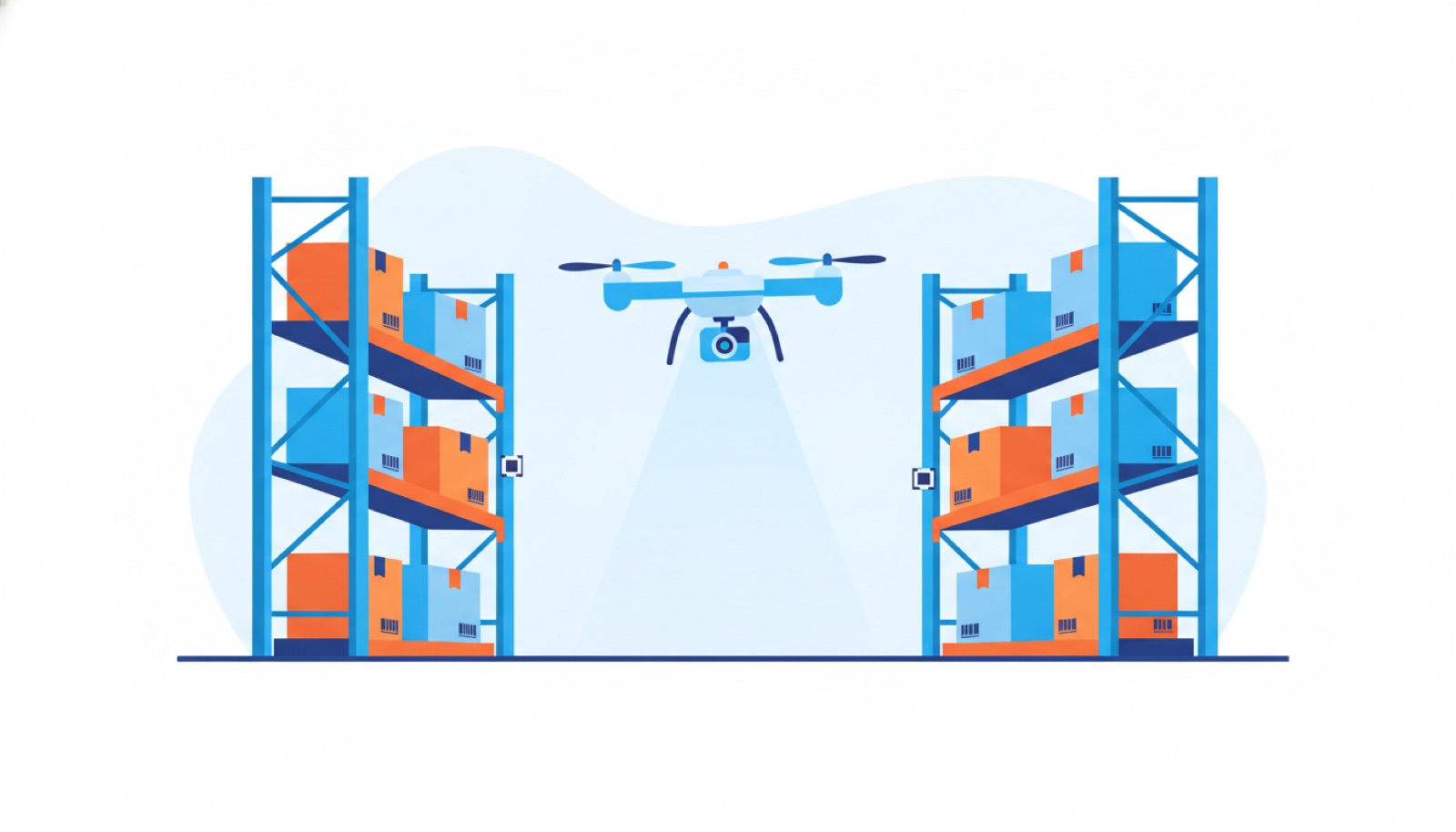
Autonomous warehouse drones, working from day one.
No new hardware. No training. No setup time. One autonomous indoor drone counts your inventory, shadows your people for engineered labor standards, checks putaway fit before the forklift moves, and takes on the next job your team thinks of.
new infrastructure to install
training flights or mapping weeks
your first flight, whatever the job
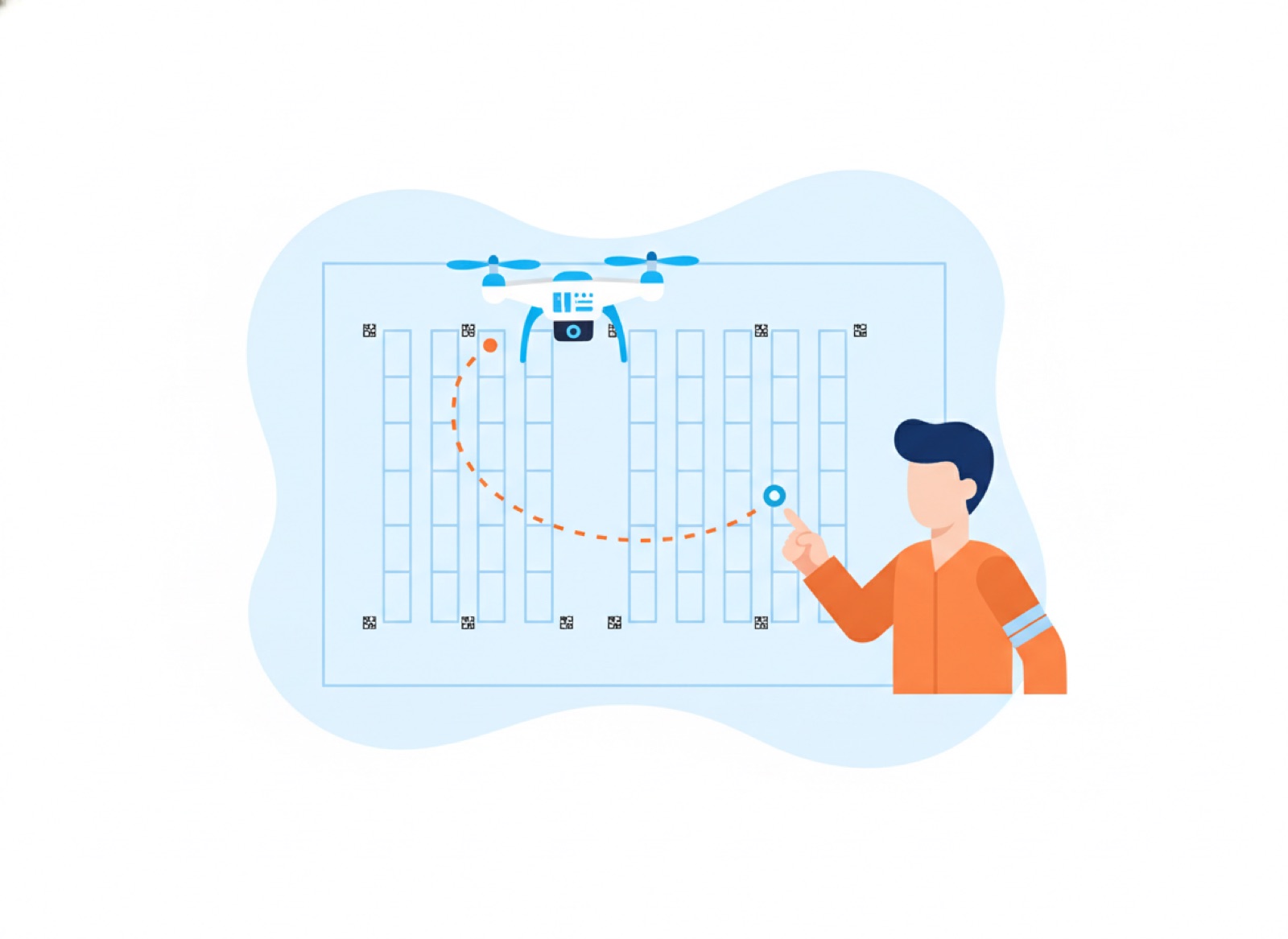
No hardware. No training. No setup.
Nothing to install and nothing to teach. The drone navigates indoors from the CAD drawing you already have, without GPS.

No GPS, beacons, Wi-Fi mesh or new servers to install.
No training flights and no mapping weeks. The first flight happens on day one.
Your team approves missions from the Activate console they already use.
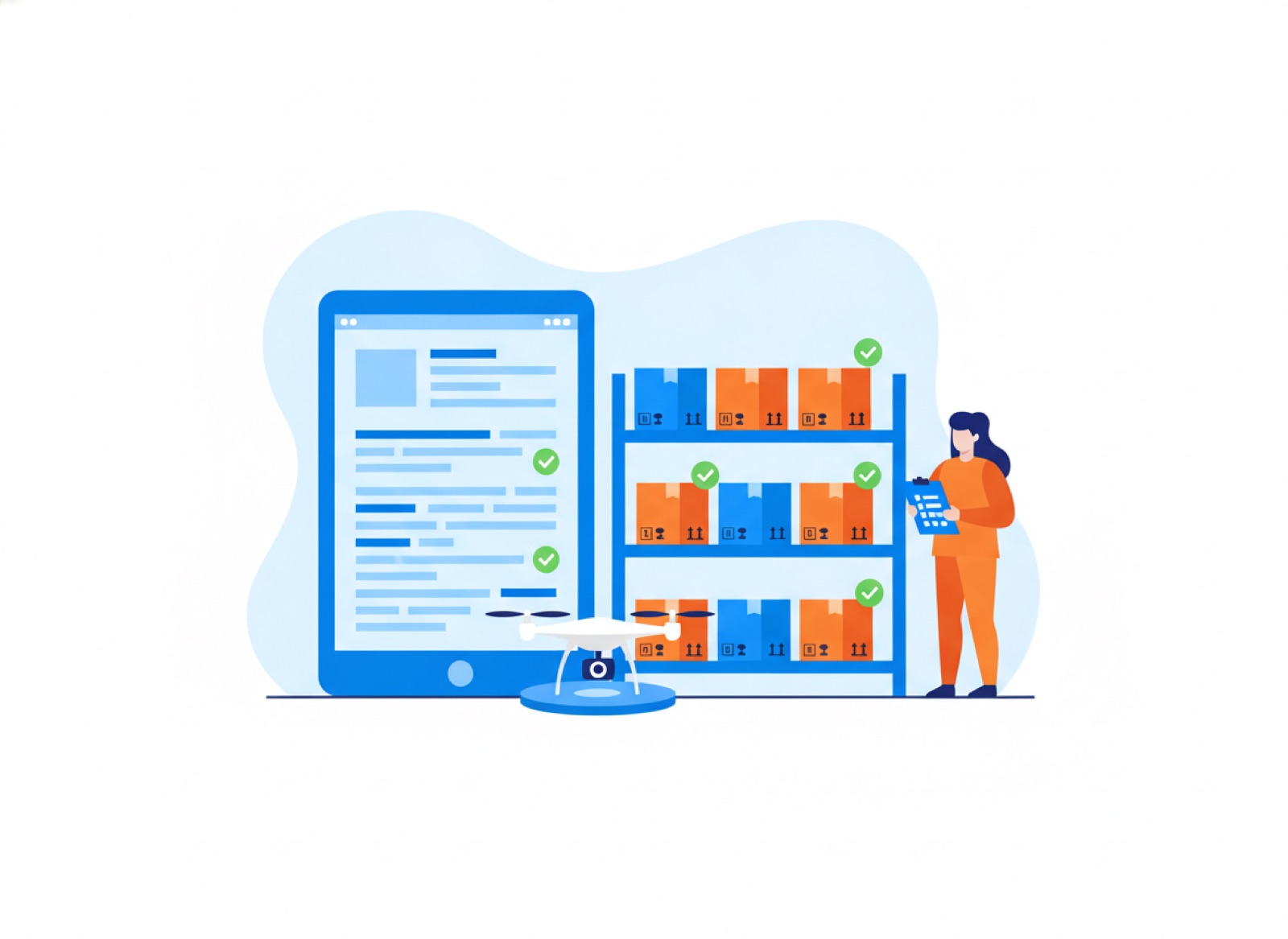
Inventory counts your WMS can trust.
Ask for an aisle or a list of locations. The drone flies it, captures evidence for every location it passes, and the count is reconciled against your inventory.
Complete-or-nothing reports. No partial counts.
Discrepancies routed to your team as work, not as a spreadsheet.
Cycle counts that run daily instead of quarterly, without pulling people off the floor.
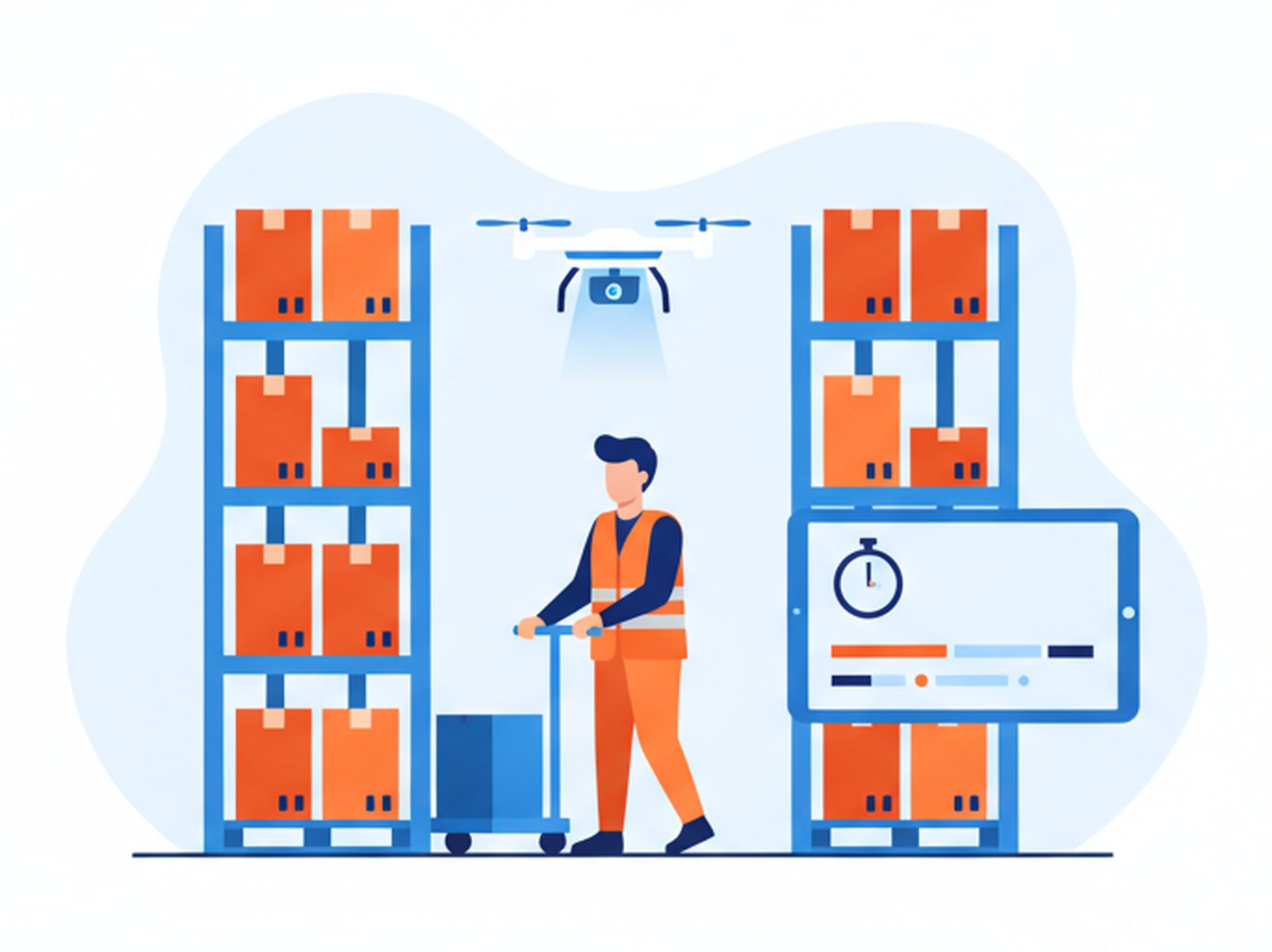
Engineered labor standards from video.
A drone shadows an associate through their work and records the shift from above. The footage is broken into work elements and timed, so your standards come from what actually happened on the floor.
Time studies from continuous video, not a stopwatch sample on a clipboard.
Every element timed against the real path: travel, handling and waiting included.
Standards your associates can see the evidence for, and that hold up when challenged.
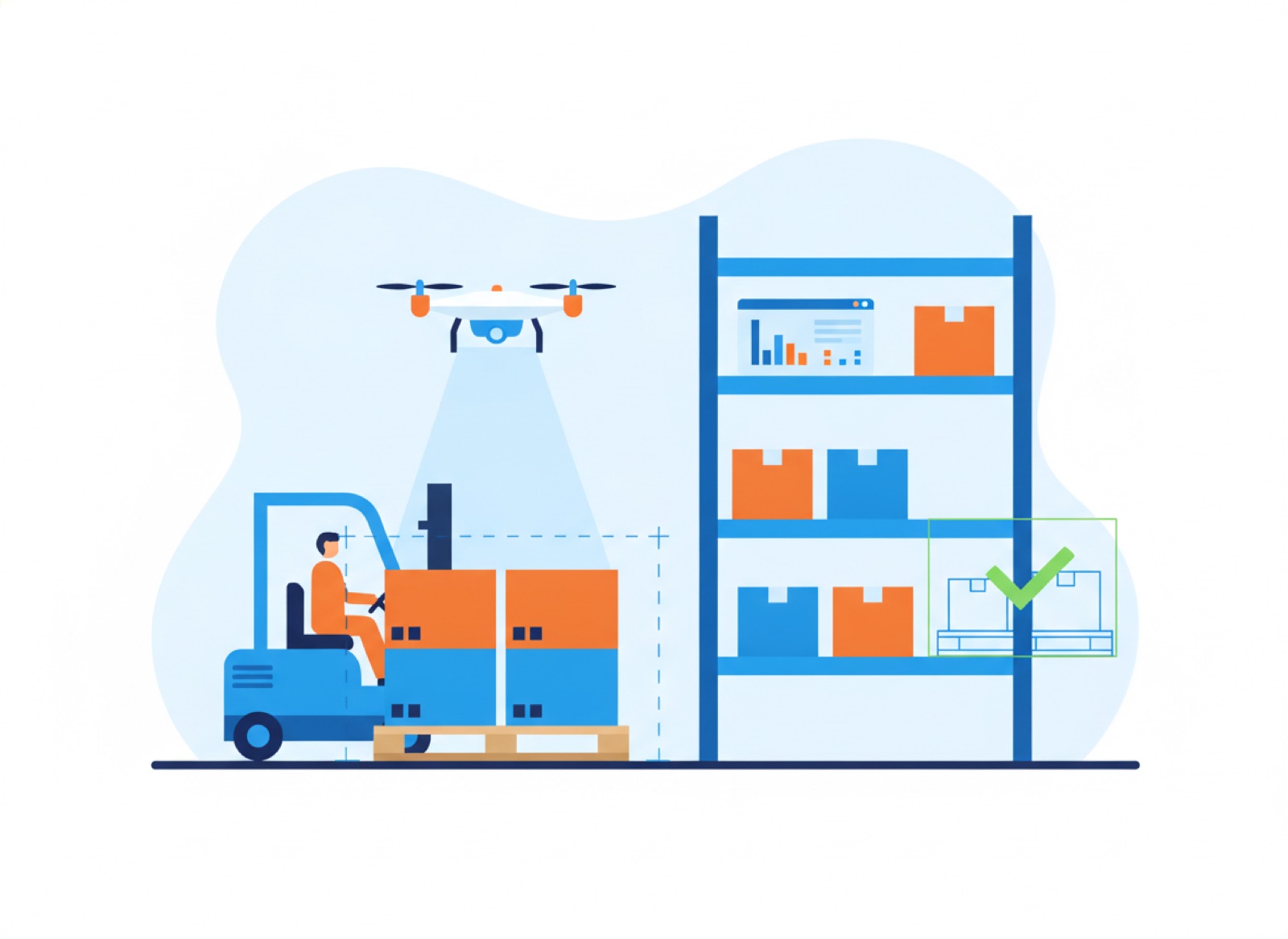
Putaway that fits the first time.
The drone measures each pallet as it lands on the receiving dock, then checks whether it will actually fit in the partially filled location the WMS has in mind, before the operator drives it there.
Pallet dimensions captured at the dock, no tape measure and no cubing station.
Fit checked against the real remaining space in the target location, not the location's nominal size.
Misfits caught before the forklift moves, not after a failed putaway and a re-slot.
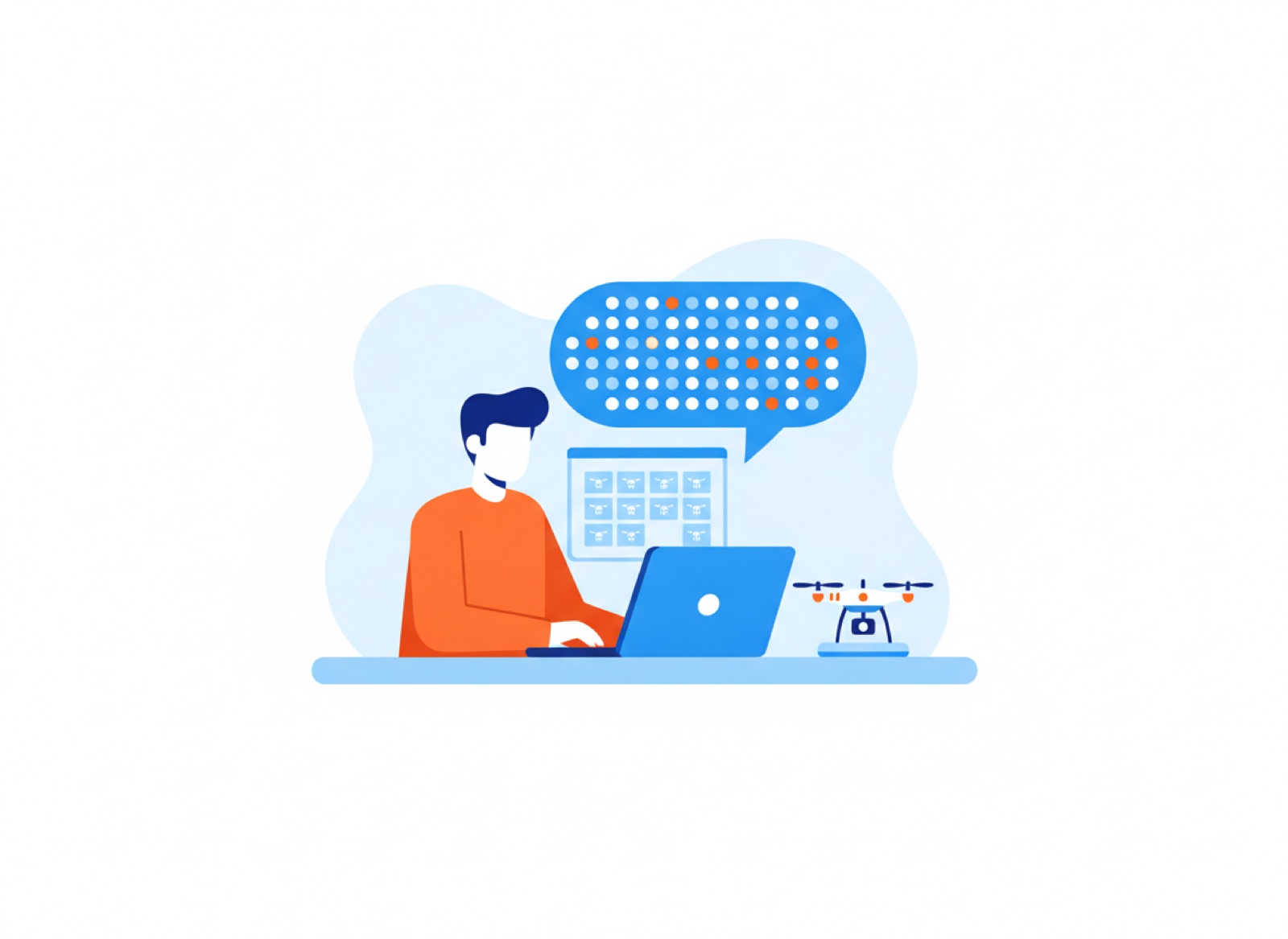
Missions in plain English.
Tell the console what you need: count aisle 12, shadow the pick floor for a shift, or measure what just landed on dock door 4. It plans the flights, estimates the time and battery swaps, and waits for your explicit go.
One mission order, validated before anything leaves the ground.
Plan numbers come from the flight plan, never from the model.
Preflight gates and a land command are always one click away.
One drone. Many jobs.
Every application below started as a question from an operations team. The drone, the console and the setup are the same; only the mission changes.
Inventory counts
Aisle-by-aisle cycle counts with evidence for every location, reconciled against your WMS.
Engineered labor standards
Shadow an associate on video and time every work element from continuous footage.
Putaway fit checks
Measure pallets at the receiving dock and confirm they fit the target location before the forklift moves.
Your next one
If a job needs eyes in the air and a record of what was seen, tell us. Most of the list above began that way.
How it works
Share
Send us the CAD drawing of your facility. That is the whole setup.
Order
Ask for an aisle count, a shift shadowed on the pick floor, or a fit check on the pallets at receiving. The console turns it into a validated mission.
Fly
Approve the plan. The drone flies the missions, swaps batteries between them and lands on request.
Deliver
Counts come back reconciled against your WMS, shadow footage comes back timed as a labor standard, and fit checks come back as a go or no-go before putaway.
Frequently asked questions
What is Veridian Vision?
Veridian Vision is an autonomous indoor drone service for warehouses that needs no new hardware, no training flights and no setup time. The drones navigate from your facility's CAD drawing and do three jobs today: inventory counts, labor shadowing for engineered labor standards, and putaway fit checks at the receiving dock. It runs inside Activate, Veridian's AI implementation platform.
What do I need to buy or install?
Nothing beyond the drones themselves. There is no GPS, no beacon network, no Wi-Fi mesh and no new server. The drone navigates from the CAD drawing of your building and small printed tags on the rack uprights.
How long until the first flight?
The same day. There are no training flights and no mapping weeks: once the drone has your CAD drawing it can fly its first count or shadow mission.
What can the drones do?
Three jobs today, and the list is growing. Inventory counts: rack locations, aisle by aisle, returned as a complete report with evidence for every location. Labor shadowing: a drone follows an associate through their work and the video is timed element by element to build engineered labor standards. Putaway fit: the drone measures pallets at the receiving dock and checks them against the space left in the target location before the operator puts them away. If a job needs eyes in the air, bring it to us.
How do labor standards from video work?
The drone records the associate's shift from above, so travel, handling and waiting are all on film. The footage is split into work elements and each element is timed, giving you a standard built on continuous observation rather than a handful of stopwatch samples. The video stays on file as the evidence behind the number.
How does the putaway fit check work?
When a pallet lands on the dock the drone captures its length, width and height. Vision compares those against the space actually remaining in the location the WMS proposes, allowing for what is already there, and tells the operator whether it fits before the forklift moves. A no-go comes back with the reason, so the location can be changed before a wasted trip.
Who controls the flights?
Your team. Every mission is approved by a named person before it leaves the ground, preflight gates are checked first, and a land request is always available in the console.
Is this part of Activate?
Yes. Vision is the drone screen inside Activate: the fleet registry, the plain-English console and the mission queue live alongside the rest of your tools.
See the drones fly on day one
Bring your CAD drawing and we will show you a count order planned, approved and flown, a shadow flight turned into a timed labor standard, and a pallet measured and fit-checked at the dock. No setup required.

See the drones fly on day one
Bring your CAD drawing and we will show you a count order planned, approved and flown, a shadow flight turned into a timed labor standard, and a pallet measured and fit-checked at the dock. No setup required.