292,000 Bins and 525 Robots: What Lululemon’s New DC Reveals About Where Warehouse Automation Is Heading
Key takeaways
- Lululemon's 1-million-square-foot Brampton, Ontario DC runs 525 AutoStore R5 pro robots over 292,000 bins, integrated by Element Logic, and became fully operational in June 2026.
- Goods-to-person systems routinely deliver 2x to 4x the picks per hour of manual operations and up to 4x the storage density.
- AutoStore's installed base is roughly 1,950 systems in 60-plus countries, with 99.8% reported uptime and 6-12 month deployments.
- The end of de minimis and higher tariffs cost Lululemon $275 million in fiscal 2025 gross profit; automation protects margin on cross-border fulfillment.
- Modular grids scale down: mid-market installations of 20,000 to 50,000 bins are penciling out at 2-4 year paybacks.
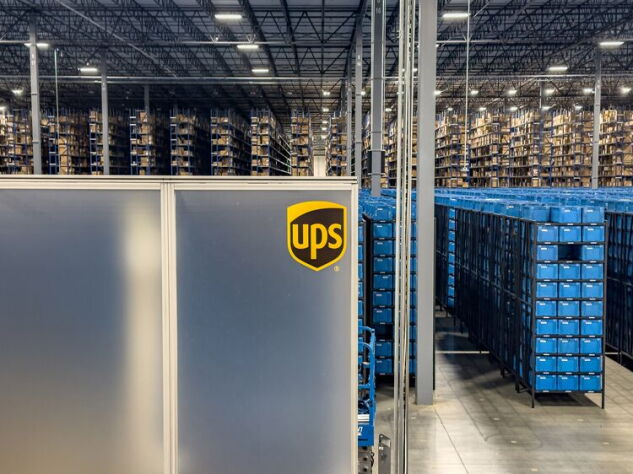
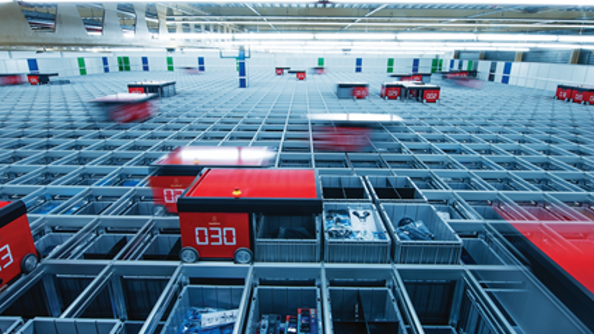
Lululemon just flipped the switch on a 1-million-square-foot distribution center in Brampton, Ontario. Inside, 525 robots glide across an aluminum grid, pulling from 292,000 storage bins to deliver inventory to human workers at pick stations below. It’s one of the largest automated distribution operations in North America, and it didn’t happen by accident.
The facility, which broke ground in 2023 and became fully operational in June 2026, was built with Element Logic as the integration partner and AutoStore’s R5 pro robots as the backbone. The setup also includes roughly 24,000 linear feet of material handling equipment and an overhead monorail transport system. All of it is designed for one purpose: getting e-commerce orders out the door faster across the eastern U.S. and Canada.
But this isn’t just a story about one retailer building a big warehouse. It’s a signal about where the broader industry is moving, and moving fast.
The Goods-to-Person Model Is Eating Traditional Picking
For decades, warehouse picking meant people walking to products. An associate would receive an order, grab a cart, and walk the aisles. In a large facility, that meant walking 10 to 15 miles per shift, with actual picking accounting for less than half of their time. The rest was travel, searching, and waiting.
Goods-to-person (GTP) automation flips that equation. Instead of workers going to inventory, the inventory comes to them. In AutoStore’s case, robots on a grid retrieve bins from a densely packed cube of storage and deliver them to ergonomic workstations where associates pick, pack, and ship.
The productivity gains are substantial. GTP systems routinely deliver 2x to 4x the picks per hour compared to manual operations. And because the storage is vertical and dense (AutoStore claims up to 4x the storage density of traditional shelving), facilities can hold more product in a smaller footprint.
The market reflects this shift. The goods-to-person robotics segment is projected at roughly $2.9 billion in 2026, according to Future Market Insights, and is expected to grow at a 14.1% compound annual growth rate through 2036. That’s faster than the broader warehouse automation market, which itself is on a tear, with estimates ranging from $27 billion to $46 billion in 2026 depending on the research firm.
Why AutoStore Keeps Winning Deals
AutoStore isn’t the only goods-to-person technology on the market. Exotec, Symbotic, Ocado, and Attabotics all compete in various forms of automated storage and retrieval. But AutoStore has built an installed base that’s hard to ignore: approximately 1,950 systems running across 60-plus countries as of mid-2026, with more than 300 installations in North America alone.
Several things explain the traction.
Density. The cube storage design stacks bins on top of each other with no aisles, no wasted vertical space, and no gaps. In urban areas or expensive real estate markets, that density translates directly to cost savings. You can fit the equivalent of a 200,000-square-foot manual warehouse into 50,000 square feet of cube storage.
Modularity. Unlike a conveyor-heavy system that requires months of reconfiguration to scale, AutoStore grids can be expanded by adding more bins, more robots, or more workstations. When seasonal demand spikes, you add robots. When it drops, you redeploy them. Lululemon’s facility was clearly designed with this in mind. 525 robots across 292,000 bins gives them headroom to add capacity without ripping out infrastructure.
Reliability. AutoStore reports 99.8% uptime across its installed base. The robots are relatively simple mechanically (they move on tracks, lower a gripper, lift a bin) and the grid itself has no moving parts. When a robot needs maintenance, another one takes over the route. There’s no single point of failure.
Speed to deploy. Traditional automated warehouses with conveyor sortation, shuttle systems, or crane-based AS/RS can take 18 to 24 months to commission. AutoStore installations typically go live in 6 to 12 months. For a retailer like Lululemon that broke ground in 2023, the roughly three-year timeline from construction start to full operation makes sense when you factor in the building itself.
The Cross-Border Wrinkle Nobody’s Talking About
Here’s the part of the Lululemon story that makes supply chain professionals wince. Five of the company’s eight distribution centers sit in Canada, and the majority of its U.S. e-commerce orders are fulfilled from those Canadian facilities. That was a cost-effective model when de minimis exemptions allowed goods under $800 to enter the U.S. duty-free.
That exemption is gone.
The Trump administration’s elimination of de minimis, combined with broader tariff actions, cost Lululemon $275 million in gross profit during fiscal 2025. That’s not a rounding error. For context, the company’s total revenue was around $10.6 billion that year. A $275 million hit to gross profit from trade policy alone is enough to reshape network strategy.
This is exactly the kind of scenario that makes automation investments more, not less, attractive. If you’re going to absorb tariff costs on cross-border fulfillment, you need every other part of the operation running as efficiently as possible. Higher picks per hour, fewer errors, faster cycle times, and lower labor cost per unit shipped all help offset the trade policy headwinds. The Brampton DC’s automation isn’t just about speed. It’s about margin protection.
And it raises a question that other retailers fulfilling across borders should be asking: does your distribution network still make sense under the current tariff regime? For some, the answer will be reshoring fulfillment to the U.S. For others, like Lululemon, it’s doubling down on automation to make the cross-border model work despite higher costs.
What This Means for Mid-Market Companies
It’s easy to look at a 1-million-square-foot facility with 525 robots and think this only applies to companies with Lululemon’s budget. That’s not quite right.
AutoStore’s modular design means you don’t need to start with 292,000 bins. Smaller installations with 20,000 to 50,000 bins and a few dozen robots are common in mid-market deployments. The technology scales down as well as it scales up.
The economics have shifted, too. Labor costs in warehousing have climbed steadily since 2020, with average wages for warehouse workers up more than 25% in many markets. Turnover rates in distribution remain stubbornly high, often exceeding 40% annually. Every percentage point of turnover carries recruiting, training, and productivity costs that compound over time.
For a mid-market distributor or 3PL running 100,000 to 300,000 square feet, GTP automation is increasingly penciling out at 2- to 4-year payback periods. That’s within the range most CFOs will approve, especially when the alternative is competing for labor in a market that shows no signs of loosening.
The integrator ecosystem has matured as well. Element Logic, Swisslog (which has delivered more than 400 AutoStore projects), and a growing network of regional partners mean companies don’t need to manage the integration themselves. Implementation has become more turnkey than it was even three years ago.
The Bigger Picture
Lululemon’s Brampton DC is part of a larger pattern. Prologis, the world’s biggest logistics warehouse operator, just reported that second-quarter lease signings hit a record 67 million square feet, with net absorption in the U.S. at the highest level since 2022. The warehouse market is heating up, and automation is a major driver.
Companies aren’t just building bigger warehouses. They’re building smarter ones. AutoStore’s spring 2026 product announcement introduced VersaAI, a robotic picking capability powered by AI models trained for warehouse environments. The direction is clear: today’s GTP systems deliver bins to humans; tomorrow’s will also handle the picking.
For supply chain leaders evaluating their next move, the Lululemon deployment offers a few takeaways worth remembering. Goods-to-person automation works at massive scale. The technology is proven, with nearly 2,000 installations worldwide. Modularity means you can start smaller and grow. And in a world where tariffs, labor costs, and customer expectations are all moving in directions that punish inefficiency, the cost of not automating is starting to exceed the cost of doing it.
The robots aren’t coming. They’re already on the grid.
The questions operators actually ask about AutoStore
Vendor case studies rarely include the awkward questions. At AutoStore Arena in Chicago in June 2026, AutoStore’s own social team put them to warehouse leaders on camera instead of running polished presentations, and the result is a candid four minutes.
It is still AutoStore’s camera and AutoStore’s edit, so listen for what gets asked rather than treating the answers as independent. Pair it with the Lululemon numbers above; the cross-border point is one you will have to raise with your own vendor.