Walmart Just Hit 1 Million Drone Deliveries. Here’s Why That Number Matters More Than You Think.
Key takeaways
- Walmart has completed 1 million drone deliveries with Alphabet's Wing, and roughly 40% of them happened in the most recent quarter.
- Seven new metros (Philadelphia, Phoenix, San Diego, the San Francisco Bay Area, Salt Lake City, New Orleans and Memphis) put the program on a path to 270-plus locations and 40 million residents by 2027.
- Regulation, technology and economics converged: after-sunset and BVLOS approvals, 60 mph drones with roughly five-pound payloads, and about $2 per delivery versus $8-12 by van.
- Drones launch directly from Walmart stores, adding another fulfillment layer to a 4,700-store network.
- Constraints remain: weather, payload limits, airspace coordination, and OMS and WMS platforms that lack drone-aware allocation logic.
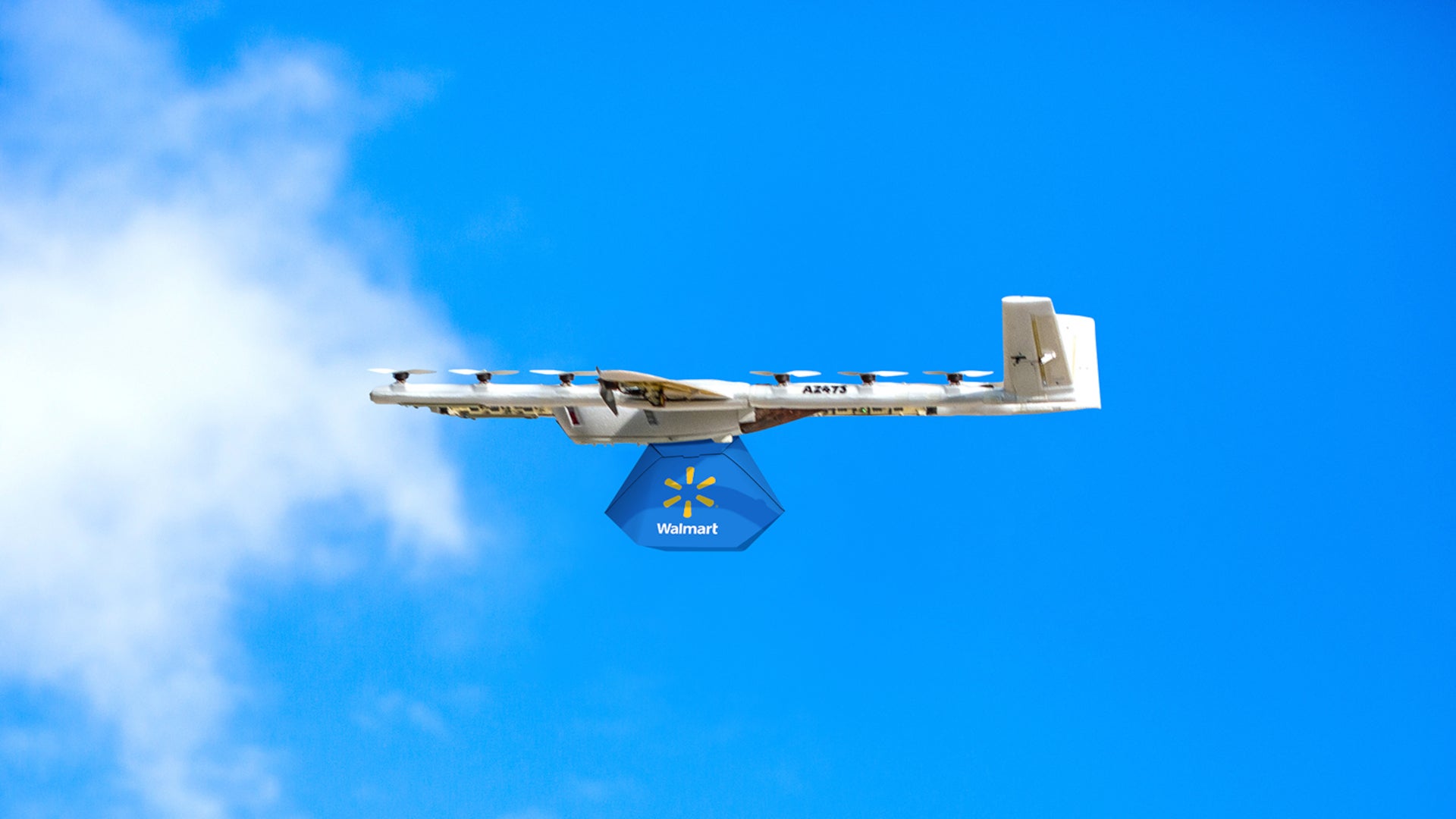
Somewhere in a suburb outside Dallas, a Wing drone drops a bag of groceries onto a front porch. The whole thing takes about 30 minutes from order to delivery. No driver. No van. No traffic. And it’s the millionth time Walmart has pulled this off.
That milestone, announced during Walmart’s Q1 2027 earnings call in May, would have been a headline-grabbing novelty two years ago. Today it’s something else entirely: proof that drone delivery has crossed the gap between “interesting demo” and “repeatable logistics operation.” Walmart and Alphabet’s Wing are now expanding to seven new metro markets, with a target of 270-plus delivery locations by 2027. The days of treating drones as a PR stunt are over. This is becoming real infrastructure.
The Numbers Behind the Expansion
Walmart’s drone delivery footprint currently spans 66 locations across four states: Texas, Georgia, North Carolina, and Arkansas. That’s already larger than most people realize. But the expansion plan announced in early June takes things to a different level.
Seven new metro areas are on the board for 2027 launches:
- Philadelphia
- Phoenix
- San Diego
- San Francisco Bay Area
- Salt Lake City
- New Orleans
- Memphis
When these markets go live, Walmart and Wing will operate in nearly 20 U.S. metros. The stated goal is to reach over 40 million residents with drone delivery access by 2027.
The growth trajectory tells its own story. Of the 1 million total drone deliveries Walmart has completed, roughly 40% happened in the most recent quarter alone. That’s not linear growth. That’s an acceleration curve that suggests the operational model is working and customers are coming back for repeat orders.
Wing CEO Adam Woodworth has been public about the repeat usage data. “Our work with Walmart has shown that drone delivery isn’t just a novelty, it’s a service many customers count on multiple times per week,” said Heather Rivera, Wing’s chief business officer. That kind of repeat behavior is the signal that separates a gimmick from a genuine fulfillment channel.
What Makes This Different From Past Drone Hype
The supply chain industry has heard drone delivery promises before. Amazon announced Prime Air back in 2013. Google’s Wing project started around the same time. For years, both companies flew demo routes, posted slick videos, and generated headlines without much to show in terms of real commercial volume.
So what changed?
Three things converged. First, FAA regulations caught up. In March 2026, Wing received approval to fly drones after sunset, extending the delivery window significantly. Beyond-visual-line-of-sight (BVLOS) approvals have also expanded, allowing drones to cover larger service areas from each launch point.
Second, the technology matured. Wing’s drones now hit speeds of 60 miles per hour and handle a range of items up to about five pounds. That covers a surprising amount of the typical convenience or grocery basket: over-the-counter medications, snacks, phone chargers, cooking ingredients, baby supplies. The drone doesn’t need to carry a family’s full weekly grocery haul. It just needs to handle the “I need this in the next hour” orders that currently eat up the most expensive last-mile capacity.
Third, and this is the part that gets supply chain operators’ attention, the economics started working. Industry estimates peg the cost of a drone delivery at around $2 per drop, compared to $8 to $12 for a traditional last-mile van delivery. Even accounting for the infrastructure needed (launch pads, charging stations, maintenance), the per-delivery cost advantage is significant at scale. That’s why Walmart’s acceleration matters. Volume is what makes the unit economics viable.
The Store-as-Fulfillment-Hub Model Gets Another Layer
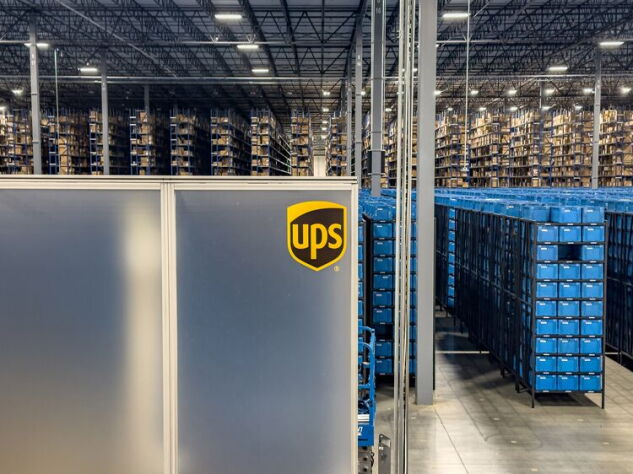
Walmart’s drone delivery program doesn’t operate from standalone drone centers. It launches directly from Walmart stores. That’s an important detail because it reinforces the retailer’s broader strategy of converting its 4,700-plus U.S. stores into multi-purpose fulfillment nodes.
The same store that serves walk-in shoppers, fills online grocery pickup orders, and stages deliveries for van-based last-mile routes now also functions as a drone launch site. Each new fulfillment channel layered onto the store’s existing operations improves asset utilization without requiring new real estate.
This model gives Walmart a structural advantage that pure-play e-commerce competitors can’t easily replicate. Amazon has been building out its own drone delivery through Prime Air, but it’s working from a much smaller physical footprint of fulfillment centers and delivery stations. Walmart’s store network gives it ready-made launch points already positioned within a few miles of residential customers.
For supply chain planners, this is worth watching closely. The economics of micro-fulfillment look very different when you can layer drone delivery on top of existing store-based operations instead of building out dedicated infrastructure from scratch.
What This Means for the Broader Market
The drone delivery market is projected to reach roughly $5 billion globally in 2026, according to Fortune Business Insights, with growth rates in the 20% to 40% range annually through the end of the decade. North America currently holds about 35% of the global market share, driven largely by Walmart/Wing, Amazon Prime Air, and a handful of healthcare and logistics players.
But the real market impact won’t show up in drone delivery revenue alone. It will show up in how drone availability changes consumer expectations and, by extension, how retailers and distributors have to rethink their fulfillment networks.
If 40 million Americans can get a five-pound order delivered in 30 minutes by drone, what does that do to demand patterns for traditional last-mile delivery? What happens to the math on dark stores and micro-fulfillment centers when a drone can cover a 10-mile radius from an existing store? How do inventory positioning algorithms need to change when a new delivery channel with different speed, cost, and capacity characteristics enters the mix?
These aren’t theoretical questions anymore. They’re planning decisions that supply chain teams at major retailers will need to work through in the next 12 to 18 months.
The Operational Challenges Nobody’s Talking About
For all the momentum, drone delivery still has real constraints. Weather is the obvious one. High winds, heavy rain, and extreme heat all ground drones, creating capacity uncertainty that doesn’t exist with van-based delivery. In markets like Phoenix (summer temps above 115°F) and New Orleans (hurricane season), weather-driven downtime could be a significant operational factor.
Payload limitations matter too. Five pounds handles a lot of convenience items, but it cuts out anything heavy or bulky. That means drone delivery will likely remain a complementary channel rather than a replacement for van-based delivery for the foreseeable future.
Then there’s the airspace coordination question. As multiple retailers and delivery providers scale up drone operations in the same metro areas, managing low-altitude airspace will get complicated. The FAA’s current framework handles the early-stage volumes, but it will need significant expansion to accommodate the kind of density that Walmart’s 270-store target implies.
And labor dynamics will shift. Drone delivery reduces the need for last-mile drivers but increases demand for drone operators, maintenance technicians, and the software engineers who keep the whole system running. It’s a different workforce, not necessarily a smaller one.
Where This Fits in the Fulfillment Stack
The smartest way to think about drone delivery isn’t as a replacement for anything. It’s as a new layer in the fulfillment stack, sitting alongside ship-from-store, curbside pickup, same-day van delivery, and traditional parcel shipping.
Each channel has a different cost profile, speed capability, and item constraint. The retailers and distributors that win will be the ones whose order management systems can intelligently route each order to the right channel based on real-time cost, capacity, and customer expectations.
That’s where the WMS and OMS integration challenge gets interesting. Today’s warehouse management and order management systems weren’t designed with drone dispatch as a native fulfillment option. As drone delivery scales, software vendors will need to add drone-aware allocation logic, airspace-aware delivery promising, and real-time drone fleet management into their platforms.
Walmart has the engineering resources to build this in-house. Most retailers don’t. That creates an opportunity for supply chain software vendors who move early to add drone delivery orchestration to their platforms.
Conclusion
Walmart’s 1 million drone delivery milestone is more than a round number for a press release. It’s evidence that drone delivery has found product-market fit in retail logistics. The 40% quarter-over-quarter acceleration, the expansion to seven new metros, and the path to 270 stores by 2027 all point in the same direction: this channel is scaling.
For supply chain leaders, the time to start thinking about how drone delivery fits into your fulfillment strategy isn’t “someday.” It’s now. The technology works. The economics are improving. And the retailers who figure out multi-channel fulfillment orchestration first are going to have a hard-to-replicate advantage.
The drone isn’t replacing the truck. But it’s absolutely joining the fleet.
Where the DFW rollout started
The million-delivery milestone traces back to Dallas-Fort Worth. Wing published this 73-second clip in January 2024, when it had just received Dallas-wide FAA approvals and announced that millions of DFW-area customers would get access that year. It is the launch moment for the network described above.
Two years on, the interesting comparison is scale, not novelty: the clip shows the model at launch, and the numbers above show what it became. The operational questions, weather, payload limits and orchestration with store picking, are the same ones that applied on day one.