Why Retailers Are Killing Their Own Products to Fix Their Supply Chains
Key takeaways
- Under Armour eliminated 25% of its SKUs over two years; inventory fell to $915 million, down 3% year over year, with better quality and tighter buys.
- Dollar General has cut more than 1,500 SKUs, Lowe's targeted a 15% reduction and Bath & Body Works is exiting whole categories.
- The bottom 20-30% of a typical retailer's SKUs generate under 5% of revenue but consume space, working capital and labor at every step.
- Fewer SKUs mean shorter pick paths, easier slotting and faster counts; a 10% cut in pick locations can lift picks per labor hour 5-7%, so WMS wave, slotting and replenishment settings should be revisited.
- Use customer-level data, not just product velocity, so loyalty-driving long-tail items are not cut by mistake.
Under Armour just finished killing off a quarter of its products. Not because they were defective. Not because of a recall. Because the company decided that having fewer things to sell would actually make it more money.
CEO Kevin Plank confirmed during the company’s May 12 earnings call that Under Armour has hit its goal of eliminating 25% of SKUs across its product portfolio. The effort took two years of deliberate pruning, and the results are hard to argue with: inventory dropped to $915 million, down 3% year over year, while the company reports “improved quality driven by tighter buys, a more focused assortment and stronger alignment with demand.”
Under Armour isn’t alone in this. Dollar General has cut more than 1,500 SKUs. Lowe’s targeted a 15% reduction. Bath & Body Works is exiting entire product categories. Something interesting is happening across retail right now, and it runs counter to the “more is better” instinct that dominated the industry for decades. The smartest supply chain operators are figuring out that complexity is expensive, and subtraction can be more powerful than addition.
The Hidden Cost of Every SKU on Your Shelf
Here’s a number that most people outside of supply chain don’t appreciate: every SKU in a retailer’s catalog generates cost at every stage of the operation. There’s the purchase order. The inbound freight. The receiving labor. The putaway. The storage space. The cycle count. The pick, pack, and ship. The return processing. The markdown when it doesn’t sell. The disposal when the markdown doesn’t work either.
Research from supply chain analytics firms consistently shows that the bottom 20-30% of a typical retailer’s SKU catalog generates less than 5% of total revenue. But those same products consume warehouse space, tie up working capital, complicate forecasting, and add friction to every operational process they touch.
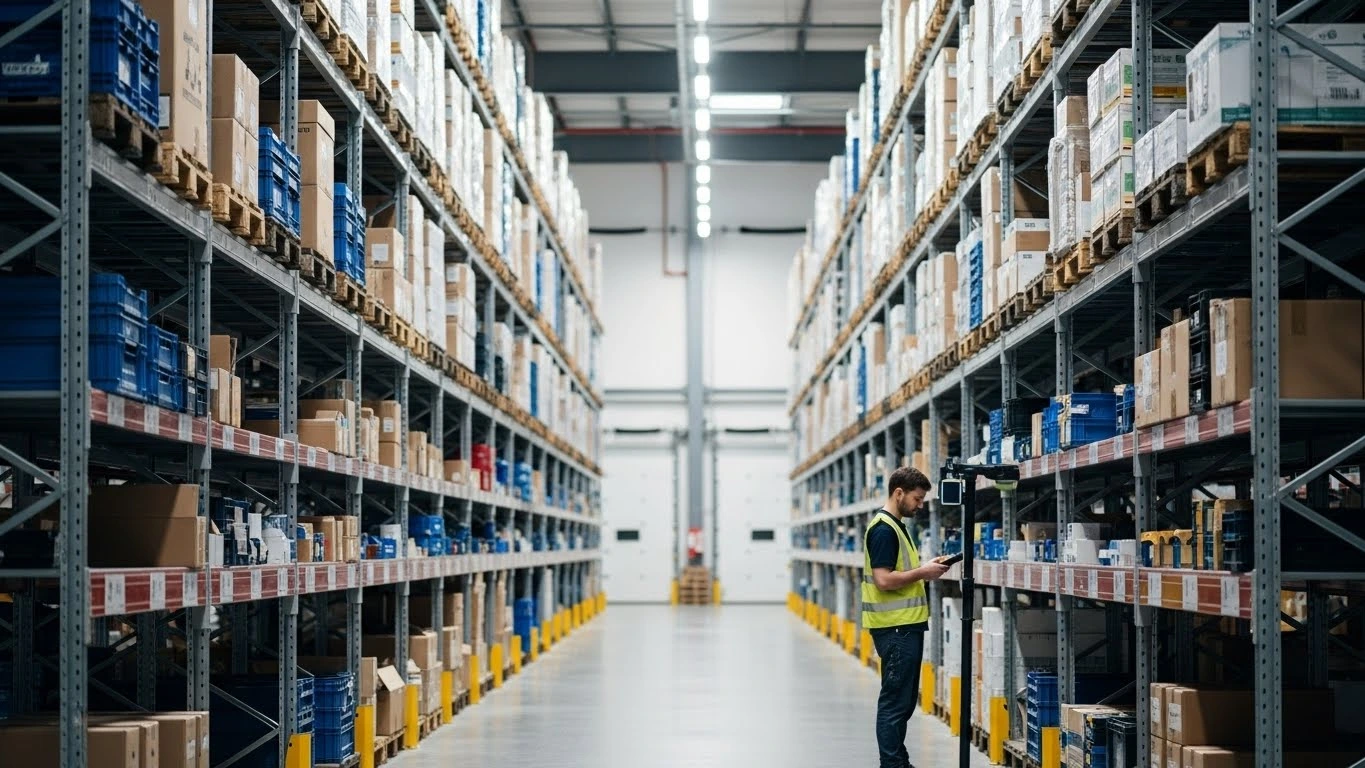
Think about what happens in a distribution center when you add 1,000 SKUs to the catalog. You need more pick locations. Replenishment cycles get more complex. Workers travel farther per order because inventory is spread across more locations. Slotting optimization gets harder. Error rates tick up because there are more similar-looking items to confuse. Every one of those effects has a dollar value attached, and most companies don’t measure it well enough to see the full picture.
Reza Taleghani, Under Armour’s EVP and CFO, put it plainly on the earnings call: “This is not just lower inventory, but better inventory.” That distinction matters. SKU rationalization isn’t about having less stuff. It’s about having the right stuff, and removing the friction that the wrong stuff creates.
What the Data Actually Shows
The companies leading this trend aren’t guessing. They’re using sell-through velocity, margin contribution, and demand signal data to identify which products earn their shelf space and which ones just take up room.
Dollar General’s CEO Todd Vasos has called SKU reduction a “big win” for the company, noting it allows them to prioritize products with faster turnaround times. When you remove slow-moving products from a store with 12,000 square feet of selling space, you don’t just save on inventory carrying costs. You free up room for products that actually sell, which improves revenue per square foot, reduces stockouts on high-demand items, and simplifies the replenishment process from distribution center to shelf.
Bath & Body Works took a different angle. CEO Daniel Heaf acknowledged that customers found stores “too overwhelming and confusing,” so the company is exiting underperforming and unprofitable categories entirely. That’s a customer experience argument, but the supply chain benefits are just as real. Fewer categories means fewer suppliers to manage, fewer inbound shipments to coordinate, fewer unique packaging configurations, and fewer forecasting models to maintain.
Lowe’s was on track to hit a 15% SKU reduction by the end of 2025. For a home improvement retailer with tens of thousands of products across hundreds of categories, a 15% cut represents a massive simplification of the supply chain. Fewer products to receive, stock, count, pick, and ship. Fewer vendor relationships to manage. Fewer opportunities for inventory to get stranded in the wrong location.
The pattern across all of these companies is the same: rationalize the product assortment, and the supply chain gets simpler, faster, and cheaper almost by default.
What This Means for Warehouse Operations
If you run a warehouse or distribution center, SKU rationalization is one of the best things that can happen to your operation, even if you had nothing to do with the decision.
Fewer SKUs means fewer pick locations, which means shorter travel distances for warehouse workers. In a large DC where associates might walk 8-12 miles per shift, even modest reductions in travel time compound into significant productivity gains. A 10% reduction in pick locations can translate to a 5-7% improvement in picks per labor hour, depending on the facility layout and order profile.
Slotting optimization gets easier too. When you have fewer products competing for prime pick locations, the math gets simpler and the results get better. High-velocity items can be placed in more ergonomic, accessible locations. Replenishment frequency drops because you’re stocking fewer items in larger quantities rather than many items in small quantities.
Inventory accuracy improves as well. Cycle counting is faster when there are fewer locations to count. Misidentification errors drop when workers aren’t choosing between 47 slightly different variations of the same product. Receiving is quicker because there are fewer unique items to check in and put away.
For WMS (Warehouse Management System) administrators, this is an opportunity to revisit wave planning, slotting rules, and replenishment triggers. A significant SKU reduction can change the optimal configuration of your system. If you’re still running the same WMS settings you had when your catalog was 25% larger, you’re leaving efficiency on the table.
The Technology Connection
Modern inventory optimization platforms are making SKU rationalization more data-driven than it used to be. Tools from vendors like Blue Yonder, Manhattan Associates, and Oracle now incorporate demand sensing, ABC/XYZ analysis, and margin contribution modeling that can identify rationalization candidates automatically.
The analysis typically works across several dimensions. Sales velocity tells you what’s moving. Margin contribution tells you what’s profitable. Demand variability tells you what’s predictable (and therefore easier to plan for). Substitutability analysis tells you whether removing a product will push customers to another item in your assortment or drive them to a competitor.
AI and machine learning are adding a new layer to this analysis. Instead of running a quarterly review with static reports, companies can now monitor SKU performance in near-real-time and flag candidates for removal or replacement as patterns emerge. Some systems can even model the downstream supply chain impact of removing a specific SKU, so the operations team knows exactly what changes to expect in warehouse throughput, transportation utilization, and labor planning.
This is where technology moves from being a nice-to-have to being a genuine competitive advantage. A retailer that can identify and act on SKU rationalization opportunities faster than its competitors will carry less inventory, operate more efficient warehouses, and respond more quickly to shifts in consumer demand.
The Risk of Going Too Far
SKU rationalization isn’t risk-free. Cut too deep and you lose customers who can’t find the specific product they want. The trick is distinguishing between products that don’t sell well because nobody wants them and products that don’t sell in high volume but serve a specific customer segment that drives loyalty and repeat visits.
This is where the “long tail” concept matters. Some low-volume SKUs exist because they serve a niche audience that’s highly valuable. A specialty running shoe that sells 50 pairs a month might not look great in an ABC analysis, but if the people buying it are your most loyal customers who also buy apparel and accessories, cutting that shoe could cost you more than keeping it.
The companies doing this well are using customer-level data, not just product-level data, to make rationalization decisions. They’re asking not just “does this product sell?” but “who buys this product, and what else do they buy?” That’s a harder question to answer, but it’s the difference between smart rationalization and blind cost-cutting.
Where This Goes From Here
The SKU rationalization trend isn’t slowing down. If anything, it’s accelerating. Tariff uncertainty is pushing companies to simplify their supplier base, which naturally reduces the product assortment. Consumer preferences are shifting toward brands that stand for something specific rather than brands that try to be everything to everyone. And the ongoing pressure to improve warehouse productivity in a tight labor market makes operational simplicity more valuable than ever.
For supply chain professionals, the takeaway is straightforward: the days of “just add more products” are over. The retailers winning right now are the ones asking harder questions about what deserves to be in their catalog, and having the discipline to remove what doesn’t belong. It’s not glamorous work. There’s no press release about the 500 products you decided not to sell. But the supply chain benefits are real, measurable, and compounding.
Under Armour spent two years cutting 25% of its products. The result? Less inventory, better margins, and a supply chain that’s easier to manage. That’s not a story about losing products. It’s a story about gaining focus.