GNC Ditched Manual Cycle Counts for Autonomous Drones. The Results Are Hard to Ignore.
Key takeaways
- GNC replaced twice-yearly manual reserve counts with four Corvus One drones on seven landing pads across its Indianapolis and Phoenix distribution centers.
- Full counts now happen 10 to 12 times a year, and the Indianapolis drones count nearly 31,000 locations a month.
- Inventory control staffing went from 20 to 13, with the seven redeployed rather than laid off; shrink and misplaced pallets dropped.
- The drones count quantity, not just presence, using thermal imaging cross-referenced with GNC's system of record.
- Next step: on-demand missions to search for specific lost pallets from WMS coordinates.
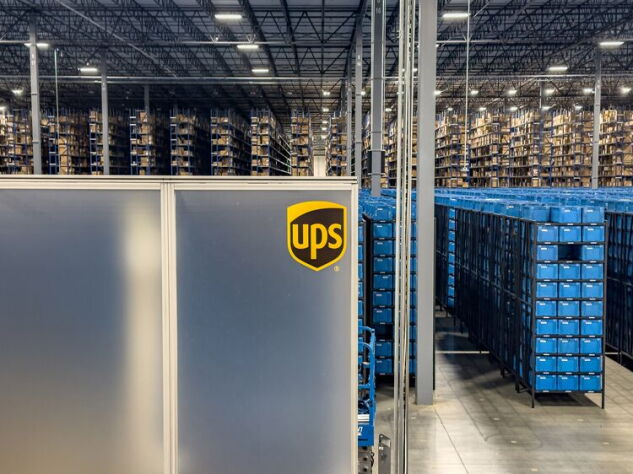
Picture this: a 450,000-square-foot warehouse, 40,000 inventory locations, and a team of workers using forklifts and lift trucks to physically count every single pallet. Twice a year. On weekends. During off-shifts. While the building runs 24/7.
That was GNC’s reality until recently. The Pittsburgh-based vitamin and supplement retailer operates two major distribution centers, one in Indianapolis and one in Phoenix, shipping to its retail stores, wholesale partners, and direct-to-consumer channels across 3,000+ SKUs. Inventory accuracy wasn’t optional. It was the foundation of their promise: every order that drops today ships today.
But the manual counting process was eating resources alive. You can’t pull lift trucks off the floor when the building never stops. You can’t easily redeploy 20 inventory control staffers when every pair of hands is already committed. So GNC went looking for a different approach and found it flying about 10 feet off the ground.
From ProMat Floor to Production Floor
Bill Monk, GNC’s VP of Distribution, first spotted Corvus Robotics at ProMat, the industry’s largest material handling trade show. What caught his attention wasn’t flashy booth graphics or marketing hype. It was what the drone actually did.
Most inventory verification solutions at the time could confirm whether something was in a location. Corvus One went further: it counted the actual quantity, using thermal imaging to develop estimates and then cross-referencing against GNC’s system of record. That distinction matters more than it sounds. Verification tells you something is there. Counting tells you how much is there. For a company managing millions of dollars in supplement inventory, that difference translates directly to fill rates and order accuracy.
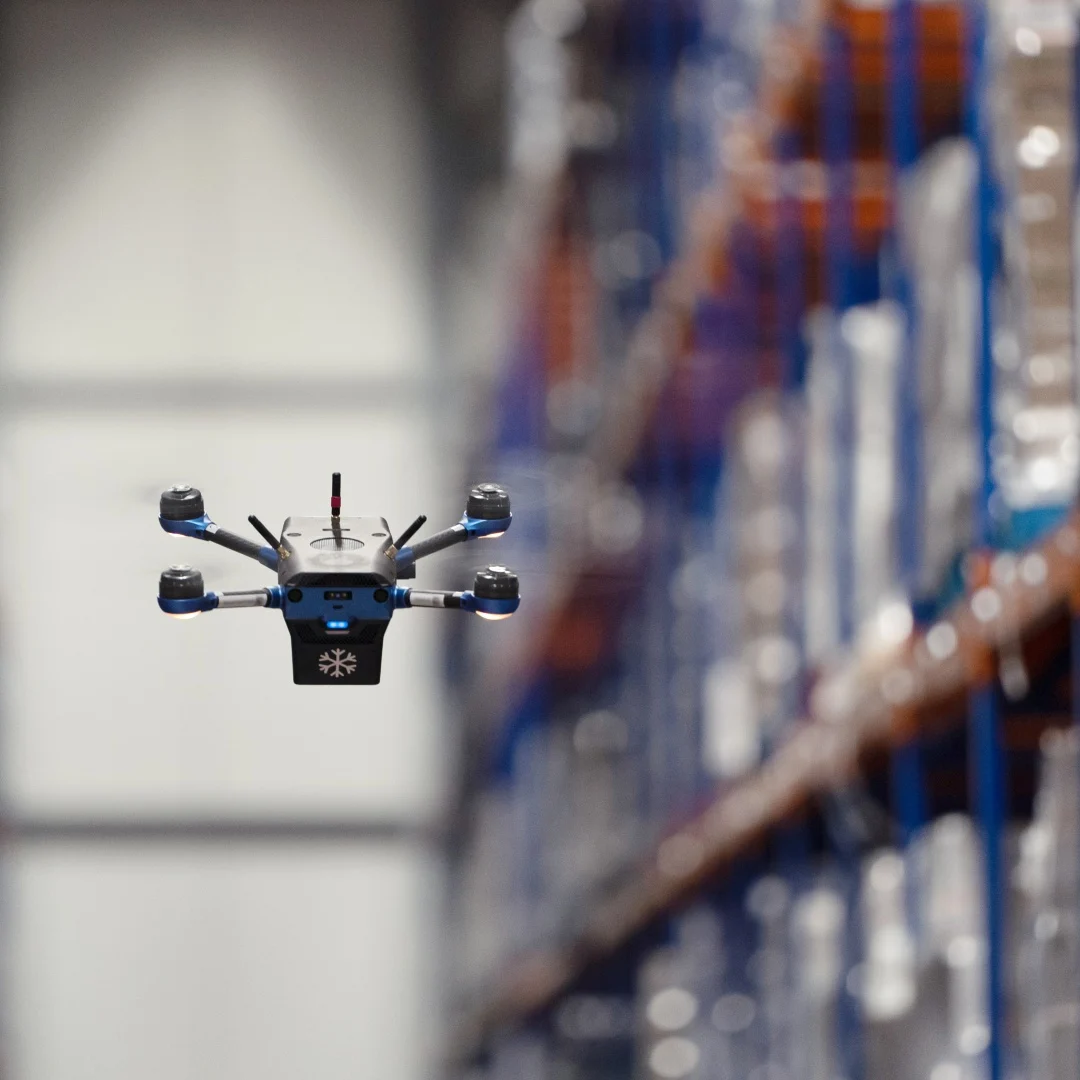
The Corvus One drones use computer vision and generative AI to navigate warehouse environments. They can operate in narrow aisles and wide aisles alike, reading barcodes in any orientation as long as labels face forward on cartons or pallets. Obstacle detection keeps them from disrupting active warehouse operations, and they fly at walking speed, producing little more than a low buzz overhead.
GNC started the rollout at its older Phoenix facility (opened in 1996), treating it as a proof of concept before expanding to the larger Indianapolis DC. The implementation moved fast. After a site survey, the first drone was airborne within weeks. Today, GNC operates four Corvus One drones across seven landing pads in both facilities.
The Numbers Tell the Story
Before drones, GNC performed complete reserve inventory cycle counts twice a year. That’s the industry baseline, and honestly, it’s what most mid-size distribution operations still do. The process required 20 employees in the inventory control department working seven days a week.
After drones, those same counts happen 10 to 12 times per year. In Indianapolis alone, the drones count nearly 31,000 locations per month across roughly 24,000 unique positions. Each drone flies seven to eight missions per day, with each flight lasting 30 to 45 minutes. Missions launch every two to three hours on a preset schedule.
Think about the math for a second. Going from 2 full counts per year to 10-12 means GNC now has roughly 5x to 6x the inventory visibility it had before. And they did it while reducing the inventory control team from 20 people to 13. Those seven employees weren’t laid off. They were redeployed to other roles in the building, ones that Monk describes as “more satisfying” for the associates themselves.
The accuracy improvements have been, in Monk’s words, “tremendous.” Shrinkage inside the four walls has dropped. Lost or misplaced pallets get flagged quickly because the drones report anything that’s in the wrong location. In a 24/7 operation where human error is inevitable (pallets get put back in the wrong slot, cases end up on the wrong shelf), having an autonomous system that checks every location multiple times a month catches problems before they cascade into missed shipments.
Why This Matters Beyond GNC
Drone-based inventory counting isn’t brand new. Companies like Ware, Gather AI, and Corvus have been in the market for several years. But what’s changing in 2026 is the maturity of deployments. GNC isn’t running a pilot. They’re not testing in one aisle. They have four drones operating across two facilities on a regular schedule, integrated into their daily operations.
That’s the inflection point for any warehouse technology: when it stops being a science project and starts being infrastructure.
A few things make this shift worth watching:
Labor reallocation, not elimination. The GNC case is a textbook example of automation freeing people for higher-value work rather than replacing headcount. Inventory counting is necessary but repetitive. Nobody builds a career around riding a lift truck to count pallets on a Saturday. Drones handle the tedious part while humans handle exceptions, audits, and problem-solving.
Frequency changes the game. Counting inventory twice a year means you’re essentially operating blind for months at a time. Things drift. Locations get muddled. By the time you discover a problem, it’s been compounding for weeks. Counting 10-12 times per year (or even more frequently) compresses the feedback loop. Errors get caught in days instead of months.
Integration with WMS is getting smoother. The real value of drone counting shows up when discrepancy data flows directly back into a warehouse management system. If a drone flags that location B-14-03 has 48 units instead of the expected 52, the WMS can adjust allocations in near real-time. That connectivity between physical counting and digital inventory is what turns drones from a cool gadget into an operational tool.
The ROI calculation is straightforward. Drones don’t need breaks. They don’t call in sick. They don’t require a forklift to reach high racking. The capital cost of four drones and seven landing pads, amortized over years of daily flights, compares favorably to the loaded cost of maintaining a 20-person inventory team with dedicated equipment. For companies running large DCs with 20,000+ locations, the payback period is getting shorter every year as the technology improves.
What’s Next for GNC
Monk has already outlined the next phase: mission-specific tasks. Instead of only flying on a preset schedule, GNC wants to send drones out on demand to search for specific lost pallets based on estimated coordinates. If the WMS shows a pallet was last scanned near a certain zone, the drone could sweep that area and locate it far faster than a person walking the floor.
That capability turns the drone from a batch counting tool into something closer to a real-time inventory search engine. It’s a small step technically (the drone already knows how to fly, scan, and report), but a meaningful one operationally.
The broader industry should pay attention. According to Gartner’s 2025 Supply Chain Technology Survey, inventory accuracy remains one of the top three pain points for warehouse operators, and the average DC still relies primarily on manual counting methods. As drone solutions like Corvus mature and deployment costs continue to fall, the question isn’t whether autonomous inventory counting will become standard practice. It’s how quickly operations that haven’t started will find themselves at a disadvantage.
Conclusion
GNC’s drone deployment is a clean example of what warehouse automation should look like: targeted, practical, and measurable. They didn’t rip out their entire inventory process. They layered in a technology that does one specific job better than humans can, then let the people focus on everything else.
For supply chain leaders evaluating similar investments, GNC’s experience offers a useful benchmark. Four drones. Seven landing pads. Two facilities. 31,000 locations counted monthly. Staff reduced by 35% and redeployed. Cycle count frequency up 5-6x. Inventory accuracy materially improved.
Those aren’t projected benefits from a vendor slide deck. They’re operational results from a company that ships to thousands of retail locations and individual customers every single day. That’s the kind of proof point that makes the business case for warehouse drones a lot easier to write.
The same drones, at minus twenty
GNC’s counts happen in ambient buildings. For anyone wondering whether the approach survives a freezer, Corvus released a 52-second clip in February 2026 of Corvus One for Cold Chain capturing inventory at -20°F.
Fifty-two seconds of vendor footage is not a case study. The GNC numbers above are the evidence that matters; the clip answers the follow-up question most cold-storage operators ask, which is whether the hardware exists yet.